
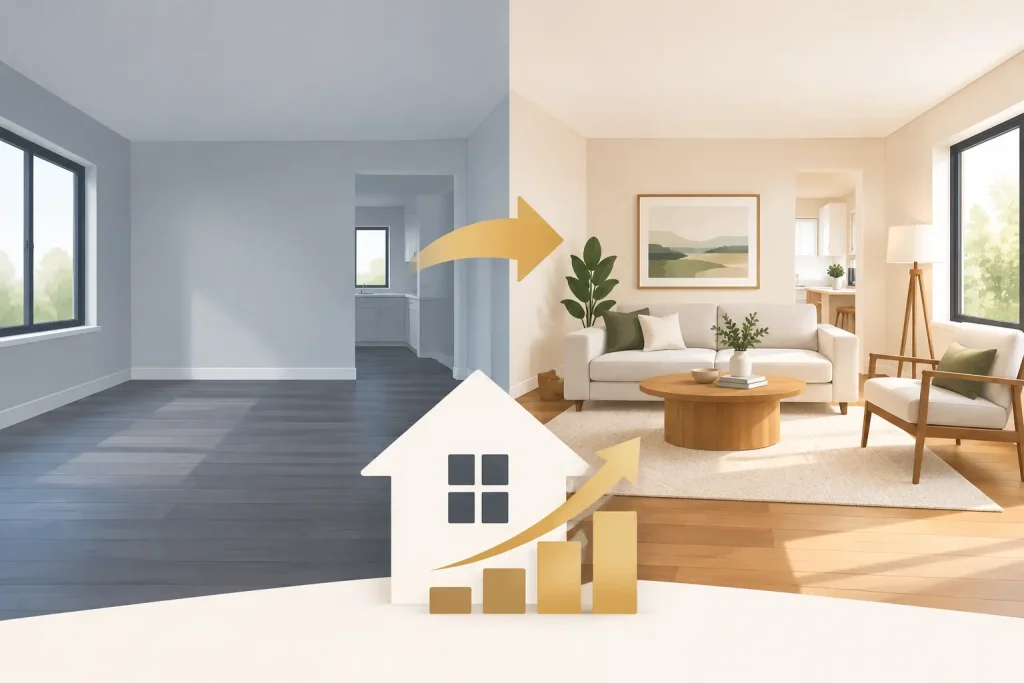
Does Home Staging Increase Value Before Sale?
A buyer can decide how they feel about a property before they have reached the kitchen. The front garden, entry, light, scent and sense of space all shape the first impression. So, does home staging increase value? It can increase the price buyers are prepared to pay, but only when it is part of a disciplined sales strategy rather than a cosmetic exercise.
Staging does not change your land size, building condition or formal valuation overnight. What it can do is reduce buyer objections, improve the quality of your marketing and help more people picture themselves living in the home. That can create stronger competition. And competition is where better sale results are often made.
Does home staging increase value or just improve presentation?
The honest answer is that staging usually improves perceived value first. Buyers do not inspect a property like a spreadsheet. They respond to how a home makes them feel, how easily they can understand each room and whether it appears well cared for.
An empty lounge can feel smaller than it is. A crowded lounge can make buyers focus on storage problems rather than the room’s proportions. The right furniture placement, lighting and styling give buyers visual proof of how the space works. That proof matters when they are comparing several homes in one weekend.
This is why staging can support a higher sale price. It helps position the property at the stronger end of its genuine market range. It is not a licence to overprice a home. Sharp pricing still matters. So does the property’s condition, buyer demand, campaign reach and negotiation once offers arrive.
A well-staged home may also sell faster. That has value in its own right. A listing that sits on the market too long can invite low offers and questions about what is wrong with it. A property that launches strongly, attracts inspections and generates early interest gives the seller more control.
Where staging has the greatest impact
Staging tends to work best when buyers need help seeing the potential of a property. Vacant homes are a clear example. Without furniture, rooms can feel cold, awkward or difficult to read. A considered staging plan shows the scale of bedrooms, defines living zones and makes photographs feel more inviting.
It can also make a real difference in owner-occupied homes where personal belongings have taken over. Family photos, oversized furniture, cluttered benches and full wardrobes are normal signs of life. But they distract buyers from the asset they are considering. The aim is not to erase personality. It is to make room for the buyer’s imagination.
In Mandurah, presentation can be especially important for homes with lifestyle features such as a pool, outdoor entertaining area, water outlook or easy access to the foreshore. Those features need to be visible in the campaign and easy to experience at inspection. If outdoor furniture is worn out, pathways are blocked or the garden is untidy, buyers may not connect the property with the lifestyle they are paying for.
Staging can be less important where a property is clearly being sold for redevelopment, major renovation or land value. In those cases, a clean, safe and accessible presentation is still essential, but spending heavily on designer furniture may not produce a worthwhile return. The buyer is assessing a different opportunity.
Presentation works best when the fundamentals are right
Good staging cannot hide a leaking roof, a tired bathroom or an unrealistic asking price. In fact, dressing a property beautifully while ignoring obvious maintenance issues can create the wrong kind of attention. Buyers may assume the styling is there to distract from a problem.
Start with the work that protects confidence. Repair visible defects. Touch up damaged paint. Replace broken fittings. Address mould, odours, poor lighting and overgrown gardens. Clean windows, floors and wet areas properly. These are not glamorous jobs, but they tell buyers the home has been respected.
Then focus on the areas that carry the most emotional and practical weight: the street appeal, entry, main living space, kitchen, principal bedroom and outdoor area. These spaces tend to feature most heavily in photography and linger longest in a buyer’s memory. A staged dining table matters less if the kitchen benches are crowded or the front door is peeling.
Professional photography, floorplans and copywriting should follow the same strategy. The campaign needs to show a clear story about the home, not a collection of attractive but disconnected images. Selling is not about making a property look different from what it is. It is about making its strengths impossible to miss.
How much should sellers spend on home staging?
There is no sensible flat figure. The right budget depends on the likely sale price, the home’s current presentation, its target buyer and the competitive listings available at the same time.
For some sellers, a light-touch approach is enough. Decluttering, hiring a few key pieces, improving linen and cushions, adding greenery and arranging existing furniture can lift the result significantly. For a vacant executive home or a property in a highly competitive price bracket, full staging may be justified because the campaign needs to perform at a higher level from day one.
The question is not whether every styling item will add a measurable dollar amount. The better question is whether the total preparation investment is likely to improve buyer enquiry, inspection turnout, perceived quality and negotiation leverage. If the answer is no, do not spend for the sake of it.
A strong agent should be direct about this. Some homes need staging. Some need cleaning, repairs and a better furniture layout. Some need neither, because the buyer appeal sits elsewhere. No guesswork, and no expensive theatre where it will not help.
Avoid styling that feels manufactured
Buyers are alert to anything that looks artificial. Overly themed rooms, furniture that is too small for the space or a house stripped of all warmth can make a property feel like a display home rather than a place to live.
The best staging is calm, practical and proportionate. It creates a sense of space without pretending a three-bedroom home is a five-bedroom home. It shows storage without cramming it full. It helps buyers understand the function of a spare room instead of leaving them to guess whether it is an office, nursery or dumping ground.
Staging and valuation are not the same thing
Sellers sometimes expect staging to raise a bank valuation or formal appraisal by the same amount it raises buyer interest. That is not how it works. Valuers assess evidence such as comparable sales, land, improvements, condition and market conditions. Styling does not alter those core facts.
However, a better campaign can contribute to a stronger achieved sale price within the range the market supports. Once a sale settles, that result becomes part of the broader evidence future buyers, agents and valuers consider. The distinction matters: staging supports market performance. It does not manufacture equity.
This is also why price strategy cannot be separated from presentation. If a home is staged beautifully but launched well above comparable properties, buyers may inspect and admire it without making an offer. If it is priced with discipline and marketed with intent, staging gives the campaign another advantage when buyers begin comparing options.
A practical pre-sale approach
Before booking furniture hire, assess the home as a buyer would. Walk from the street to the front door. Stand in each doorway. Check what appears in the first line of sight, what smells noticeable and whether every room has a clear purpose. Then compare the property honestly against current competition.
From there, prioritise the changes that improve confidence and photos first. Cleanliness, repairs, light, landscaping and decluttering generally come before decorative extras. Decide whether partial or full staging will help the target buyer understand the home more quickly. Finally, make sure inspection presentation is maintained throughout the campaign. Great launch photos lose their value if the home feels neglected at the first open.
Home staging is not magic, and it is not compulsory for every sale. But when it is matched to the property, buyer pool and pricing strategy, it can turn a good home into the one buyers remember. That is the point: create a campaign that gives serious buyers fewer reasons to hesitate and more reasons to act.

